by Marion Duval
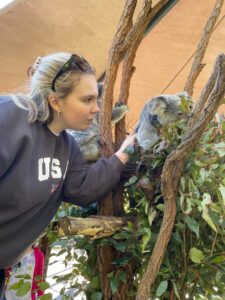
On my very first day in Sydney, I stopped dead in my tracks to marvel at a flock of large, striking white birds with long, curved black beaks. To my American eyes, they looked exotic and out of place in a small park. A quick Google search informed me that they were Australian White Ibises, notoriously known as “bin chickens”, the local equivalent of the ordinary American backyard squirrel or city pigeon. Over the last 9 months, one of my favorite things as a big animal lover has been getting to experience animals I’d never see in the U.S. and admiring their unique qualities such as the magpie’s song, the beautiful colours of the rainbow lorikeets, adorable wallabies that stare back at me across a paddock, the dinosaur-esque cassowary, plenty of weird looking birds (I’m partial to the bush stone curlew – just look at them!) and of course the iconic koalas.


But I didn’t come to Australia just as a tourist; I came as a Fulbrighter to engage in international scientific collaboration. Back in the U.S., my research background was rooted in biochemistry and wet-lab bench work. Joining AWGG meant pushing myself completely out of my comfort zone by stepping into the world of genomics, transcriptomics, and bioinformatics. By immersing myself in a brand-new discipline, I’ve spent the year learning how to use computational tools to decode the genetic mysteries of koala milk, expanding my skills in genomics while learning a fascinating amount about koala biology and their unique life history along the way.
The Secret Shield in Koala Milk
As marsupials, koala joeys are born incredibly underdeveloped, tiny, hairless, and without a functioning immune system, yet they survive in a pouch teeming with environmental bacteria. Their secret weapon is the mother’s milk, which acts as a dynamic, protective shield packed with specialized immune proteins called antimicrobial peptides (AMPs), including defensins and cathelicidins. These are nature’s own targeted antibiotics, doing the heavy immune lifting while the baby develops.


My day-to-day research is a bit like acting as a molecular detective. Instead of working directly with koalas or their milk samples, I run scripts to filter through thousands of sequences on a high-performance computer cluster. It’s always exciting when you map a previously unknown protective factor, gathering the blueprints needed to better engineer specialized milk replacement formulas. When wildlife carers rescue orphaned joeys, standard formulas provide nutrition but lack this natural immune armor; our work aims to bridge that immunity gap and give hand-reared joeys a better chance at survival.
Living the Sydney Life (and Running into a New Culture) Of course, the Fulbright experience is defined just as much by life outside the lab. I’ve been playing soccer since around the age of 3-4, so finding a local social league here allowed me to make friends while playing matches I look forward to twice a week. Despite having always played soccer, I would never describe myself as a runner; in fact, I would tell people I actively disliked going for a run just to run outside the competitive sport context. However, I fell victim to Sydney’s run club culture and am currently training to run the 14 km City2Surf race this August. Besides exercise, I’ve taken some time to explore the neighborhoods of Sydney, trying new cafes/restaurants/pubs, reading, finding a new favorite beach, and traveling around Australia.


When my time here comes to an end, there is so much I am going to miss: the community of friends I’ve built, the stunning coastlines, the world-class café coffee, delicious lemon lime bitters, and the fact that aioli seems to be the go-to dipping sauce. Ultimately, combining my experience doing bench biochemistry assays in the U.S. with learning new genomics skills in Australia has shaped who I am as a researcher. It has taught me that the challenges facing our natural world are global, and the best way to solve them is by sharing knowledge and working together, even if it means trading squirrels for bin chickens along the way.
Author
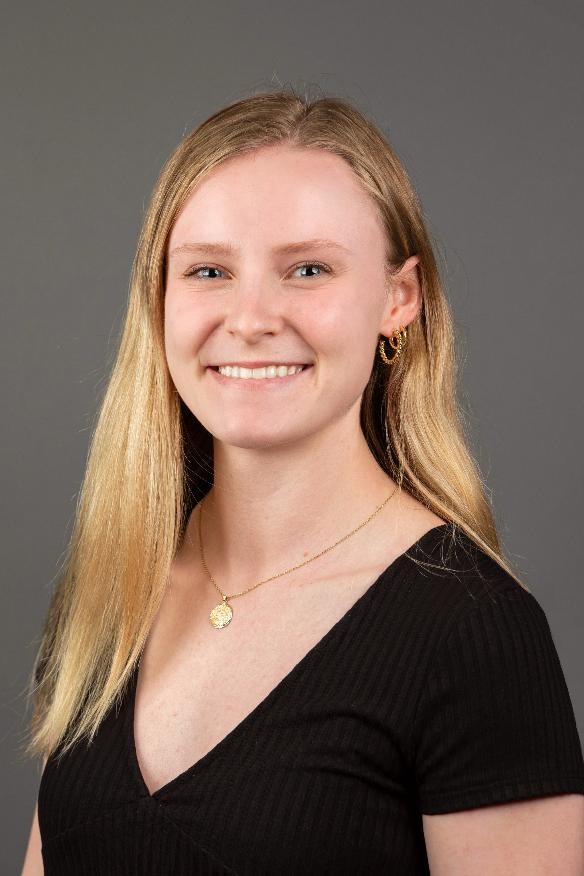
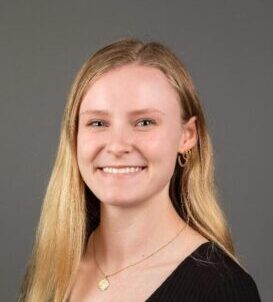
Marion Duval (Fulbright Scholar) is investigating the innate immune repertoire expressed in koala milk matrices. Utilizing computational pipelines, she characterizes novel antimicrobial peptides (AMPs) crucial to altricial development and pouch-stage immunity. This research translates functional immunology into wildlife conservation strategies by supporting the development of optimized milk formulas, with the ultimate aim of improving the survival rates of orphaned koala joeys and strengthening rehabilitation efforts.