by Patra Petrohilos (PhD Student) I love dystopian horror. I love to relish in the thrill of disgust from the comfort of safety – a comfort bolstered by the knowledge that such grotesquerie could never actually happen in real life. Zombies don’t exist. Monsters aren’t trying to escape from the Continue Reading
admin
Remnant kenngoor (Phascogale calura) retain genetic connectivity and genetic diversity in a highly fragmented landscape
Type: Journal Article Reference: de Visser, R. S., Hall, M., Ottewell, K., Pierson, J. C., Sanders, A., Friend, J. A., Berry, L., Hogg, C. & Catullo, R. A. (2024). Remnant kenngoor (Phascogale calura) retain genetic connectivity and genetic diversity in a highly fragmented landscape. Conservation Genetics, 1-15. https://doi.org/10.1007/s10592-024-01603-z Abstract Kenngoor Continue Reading
Dating in the Dark: Elevated Substitution Rates in Cave Cockroaches (Blattodea: Nocticolidae) Have Negative Impacts on Molecular Date Estimates
Type: Journal article Reference: Toby G L Kovacs, James Walker, Simon Hellemans, Thomas Bourguignon, Nikolai J Tatarnic, Jane M McRae, Simon Y W Ho, Nathan Lo, Dating in the Dark: Elevated Substitution Rates in Cave Cockroaches (Blattodea: Nocticolidae) Have Negative Impacts on Molecular Date Estimates, Systematic Biology, Volume 73, Issue Continue Reading
A chromosome-level genome assembly for the dugong
Type: Journal Article Reference: Dorothy Nevé Baker, Linelle Abueg, Merly Escalona, Katherine A Farquharson, Janet M Lanyon, Diana Le Duc, Torsten Schöneberg, Dominic Absolon, Ying Sims, Olivier Fedrigo, Erich D Jarvis, Katherine Belov, Carolyn J Hogg, Beth Shapiro, A chromosome-level genome assembly for the dugong (Dugong dugon), Journal of Heredity, Continue Reading
Translating genomic advances into biodiversity conservation
Type: Journal Article Reference: Hogg, C.J. Translating genomic advances into biodiversity conservation. Nat Rev Genet (2023). https://doi.org/10.1038/s41576-023-00671-0 Abstract A key action of the new Global Biodiversity Framework is the maintenance of genetic diversity in all species to safeguard their adaptive potential. To achieve this goal, a translational mindset, which aims Continue Reading
Sydney Science in Instagram: Meet PhD Student Holly Nelson
Meet PhD student Holly Nelson. Her research with the USYD Australian Wildlife Genomics group and NSW Department of Planning and Environment focuses on using genomic data to help provide tools for the management of threatened species, especially the critically endangered Bellinger River snapping turtle. Watch the full video here: https://www.instagram.com/sydney_science/reel/Cw1FG6-hhD8/
ABC News: Australian syllabuses fail to mention female contribution to STEM
Professor Carolyn Hogg says she was stunned to hear about the outcomes of the study after it found Australian syllabuses failed to mention the contribution of women in STEM. Find the full interview here: https://www.abc.net.au/news/2023-08-28/australian-fail-to-mention-female-contribution-to-stem/102784630
How to catch a Tasmanian devil
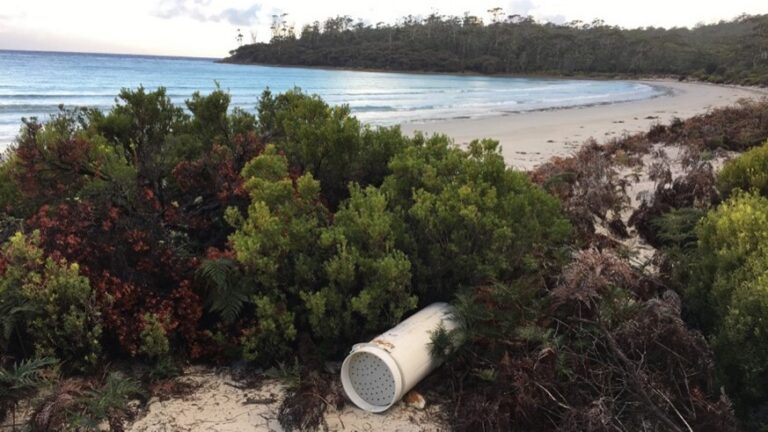
by Dr Elspeth McLennan (Post-doc) Tasmanian devils are nocturnal. We set traps during the day and overnight curious devils will come to investigate. The traps we use are made of strong PVC plastic fashioned into a cylinder with a spring trap door (see cover picture). The traps are baited with Continue Reading
DNA methylation networks underlying mammalian traits
Type: Journal article Reference: Haghani, A., et al. (2023). DNA methylation networks underlying mammalian traits. Science, 381(6658), eabq5693. https://doi.org/doi:10.1126/science.abq5693 Abstract Using DNA methylation profiles (n = 15,456) from 348 mammalian species, we constructed phyloepigenetic trees that bear marked similarities to traditional phylogenetic ones. Using unsupervised clustering across all samples, we Continue Reading
Universal DNA methylation age across mammalian tissues
Type: Journal Article Reference: Lu, A. T., et al. (2023). Universal DNA methylation age across mammalian tissues. Nature Aging. https://doi.org/10.1038/s43587-023-00462-6 Abstract Aging, often considered a result of random cellular damage, can be accurately estimated using DNA methylation profiles, the foundation of pan-tissue epigenetic clocks. Here, we demonstrate the development of Continue Reading